Monday, January 16, 2012

Quick re-post: "Too Much For the Brain To Take In"


I was reading this article within the context of "observation". The Australian Arts & Lifestyle has a good article on a topic we have seen before: Too Much For The Brain To Take In

I'm going to take the liberty of excerpting what I think is the gist below, which lays out a logic for what we value in art: a transformative experience. That delightful mix of Resonance with an idea and Wonder at its realization or character. Experienced internally through observation and presence, and shared through proximity and subsequent conversation:
"A picture is not absorbed in a flash, apparently, but by a process of visual assembly. "The result of this rather mad experiment," says Alexander Sturgis, the curator of a show based on this research, was that "surprise, surprise, everyone looks differently". 
Our idiosyncrasies put curators to the test....  A single picture, hung in isolation with no writing around it and perfect lighting, might be what some people long for, but others will be completely put off." 
"You might assume that going to an art gallery is about looking at art works," says Leader, "but it's just as much about looking at other people. When the Chapman brothers showed their McDonald's effigies many were shocked because the amazing thing about that show was that the room was dark and people could only look at the work, not at each other." Many shuffled away quickly to discuss it afterwards in the safety of their fellow group...
"In a sense we are not interested in art. We are interested in what other people are interested in. 
"Built into how we see an art work is how someone else sees it," Leader says. As he explains in his Stealing the Mona Lisa: What Art Stops Us From Seeing, "visual images on their own might trap us, but for our capture to become more than transitory they need to take on a symbolic, signifying value". 
"A place has to be made for them. Crucially, art works need to mean something for someone else."
[snip] 
"Our relationship with art is far more than visual. It is social, emotional, philosophical and spiritual. You will push your way free of the thronged blockbuster when you have reached the end of your physical or mental strength. This could take three hours or three minutes. But there will probably be an image that you won't be able to push out of your mind. It will have outfaced you in the staring contest. It's not you who takes in the art, but the art that takes over you."
I wonder about that last idea that for "our capture to become more than transitory they need to take on a symbolic, signifying value" and consider if it's possible to integrate such a social and psychological phenomena into an exhibition. Or is that something that happens whether or not we try? Perhaps I'm making this too much for my brain to take in.


Thursday, January 12, 2012

When is it exhibit or art and does it matter?


Walk with me through this one. As I'm working on the next exhibit concept, thoughts like these cross my mind:

How much responsibility do I have to be educational in my exhibits? 

For example, I'm working on this concept of "Observation". How much am I responsible for educating people about what the universe defines as observation? There is of course the need to inform the public enough about any topic so they can get into the exhibit-- however, is there a line around what the quality of that knowledge is that I present?

At what point does it tip into art, and do I need to be declarative about it?


In 1999, I worked on a piece at the Yerba Buena with Neil Grimmer called "Metatherapy.com". It was a fictitious product showroom for a web and pager system that would deliver mantras to you based on Chakra points. Some visitors laughed, others approached us and suggested that we install it in hospitals and shopping malls.

We thought that it was important to the piece to leave it up to visitors to decide- as for the idea we were floating this idea of melding technology and spirituality.

The SF Mobile Museum is a construct I've created with the intent to play with the concept of museums, exhibits, and art. I believe that if it serves the experience to be agnostic about intent, so be it. I do wonder is there a case where that is not true?
 
Does it matter?

When we see "museum" is there some universal process that we all assume has been applied? I can think of similar assumptions from the well-known Fox "News" to calling just about anything an "artifact". Many art careers have been built upon "artifacts".

In the context of the SFMM, I've been working on the assumption that it doesn't matter, because the whole idea is to explore and expand the basic concept of "museum"-- so that means playing with it in a variety of ways.

Again, I go back to the quality of the experience. If it serves the concept and fosters the quality of experience I'm trying to achieve, then it doesn't matter how I get there, as long as it follows a logic that serves the idea/experience.

Right?

I'm not asking for permission, and I am probably overthinking (my part-time hobby). I do wonder if others think about this, and questions or conclusions they arrive at. What responsibility do you feel you have, if any?

Friday, December 9, 2011

We're not the only game in the Mobile Museum town

There are some wonderful other projects out there in Mobile Museum Platform Land. Thought I would share a few of the prolific ones.

I'm finding that this type of platform is well suited to some forms of engagement and not others. It's very well suited to experimentation on a variety of scales, but maybe not for displaying costly works of art (though some may disagree with that).

Of course there is an existing history of mobile museums which are exhibits in flatbed trucks. This is focusing on exhibitions with a more participatory bent:

The Pop-Up Museum of Queer History

Now just because you may *not* be queer doesn't mean there isn't anything to glean from this. Think this museum provides an excellent model for how a history museum can enrich and engage:
"The Pop-Up Museum of Queer History is a grassroots organization that transforms spaces into temporary installations celebrating the rich, long, and largely unknown histories of lesbian, gay, bisexual, and transgender people. We believe that our community – and especially our youth – deserve to know our history. If you don’t know you have a past, how can you believe you have a future?"

 The Mobile Arts Platform

MAP is the ultimate mash-up of popp-up-art-installation-craft-camp-concert-on-the-street. They have created a platform that allows them to make cultural events and installations on the street:

"The Mobile Arts Platform (MAP) is comprised of two large-scale, interactive sculptures that are activated by a mobile exhibitions program. MAP brings together Peter Foucault’s Fal-Core Van – a retrofitted 1963 Ford Falcon – and Chris Treggiari’s Mobile Art Trailer in locations throughout the Bay Area. MAP creates an autonomous exhibition space, an artistic research lab where a cross pollination of mediums and genres can occur, be accessible to the public, and create strong bonds with partner communities. MAP events include video screenings, visual art, performance art, live music, interactive artworks, and culinary art."


The Black History Mobile Museum

The vision for this museum is to bring the subject matter via the museum to the people through a mobile platform that also allows him to create flexible and tailored exhibitions. They can range from racist artifacts to hip-hop and sports:

"For the past 20 years, the Black History 101 Mobile Museum has acquired thousands of original artifacts of Black memorabilia that date from slavery to Hip Hop culture.  The Black History 101 Mobile Museum travels to colleges, universities, K-12 schools, conferences, and cultural events across the country."


What made these projects stand out was their inherent sense of experimentation, their ability to sustain, and their DIY approach. I'm highlighting them here because I want to support the idea that museums can be informal and wonderful.

Thursday, December 1, 2011

Observatorium


Been thinking lately about moving away from a challenge-based approach for my next experiment and focusing on observation. When I worked on the Outdoor Exploratorium project, I always wanted to do a piece that would allow folks to play with different types of observation tools and skills.

So I'm starting to brainstorm what those might be, and what type of platform it would take to make it transportable. I may still include a challenge in it, but the challenge may be around what it is you are looking at.

Image by Flickr/Warm Sleepy

Sunday, May 22, 2011

#aam2011: Our presentation

I thought I would share our presentation from our session at #aam2011 today. I was honored to share the stage with Ashely Remer of the Girl Museum, Jon West-Bey of the American Poetry Museum and brilliant moderator Paul Orselli of the Paul Orselli Workshop.

What is it about? Our experiments, and why we think approaches such as these are good for the future of museums.
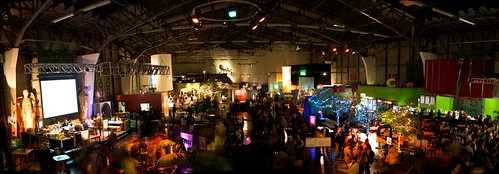
It was a lot of fun to share the work. Thanks, all!

Thursday, May 19, 2011

Here We Come: #aam2011

san francisco mobile museum, american poetry museum, girl museumHi.

We're delighted to be participating on a panel with Girl Museum and the American Poetry Museum at the American Association of Museums conference. Our panel is this Sunday from 1:15 p.m., room 372E and is called "Future of Exhibiting: Voices from Non-traditional Museums".

We'll be sharing our experiences and perspectives the work we've done with our alternative museum projects. I'll post links to slides and additional materials soon!

Monday, May 16, 2011

A Cause for Reflection with the Center for the Future of Museums

If you've been following, you've probably heard that we participated in a blog series with the AAM's Center for the Future of Museums. They've called it "Museums and the Spectrum of Control". It looks at a set of projects which challenge the notion of authoritative museums in unusual ways.

In Part 1, Barbara Stauffer chief of temporary exhibitions at the National Museum of Natural History shared her work on a project where they invited the community to crochet pieces for a giant "coral reef" installation.

In Part 2, I shared our brief history of playing with both the idea of a mobile platform and participatory projects.

For Part 3, Streetcolor talked about her experiences with 'Yarnbombing' in relation to museums.

Finally, we had a bunch of emails amongst ourselves reflecting on how reading about each other's processes impacted our thinking:

"Closing the Loop"

It's great when you're doing experimental work to have a chance to reflect. Grazie, CFM.

Image: CC/Flickr/Basyke

Sunday, May 15, 2011

Free SHRINE: Gone But Not Forgotten: A Burro Story 1982-2010

free shrines, sfmobilemuseum, san francisco mobile museum, Marcia StuermerBy Marcia Stuermer

Clarissa was a town burro from Murphy’s, an historic Gold Country town who died earlier this year. She was 27. She was an affectionate and wildly loved animal- the result of a University of CA program that rounded up feral burros in Death Valley and adopted them out.

No one could visit the town without paying a visit, usually with a treat. After her death, her shed was turned into a giant memorial of flowers, notes and other gifts. Often townspeople paying their respects could not hold back tears. The town of Murphy's will hold a tribute in her honor on August 6th. It is rumored that they might even erect a statue in her name. It’s yet to be determined if the town will adopt another burro to hold court.

Let me tell you, I have never heard such a sound as the earth-shaking braying that would come from a delighted Clarissa when she was aware that someone had brought her food! I hope that sound will continue to echo on that corner of Murphy’s Main Street for many years to come.

Note: Marcia Stuermer also created this piece for our first exhibit, "Looking for Loci".

Sunday, April 24, 2011

Art & Science: Microscopic Success

Last Fall we participated in Phil Ross' "Enormous Microscopic Evening" at the Hammer Museum. It was part of Machine Project's residency.

As I've said before, this is a deeply engaging, fun event for artists, scientists, and especially the public. Someday I'll post my pictures!

Emily Lacy from Machine recently sent us this video. It says it well:

Enormous Microscope Evening from machine project on Vimeo.

Wednesday, March 16, 2011

Movement Museum Offers a Mobile Model

Scott Moulton, an Exhibit Designer at Gyroscope and fan of the SFMM, sent a link to the "Movement Museum, A Creative Field Station for the Study of Movement".

Movement Museum is part of an ongoing series out of the Works Progress group in Minneapolis:
"Works Progress is a loosely affiliated group of creative collaborators who bring unique skills and experience to our collective work. A few of us make up the core Works Progress crew, while others contribute on a project-by-project basis."
They have multiple participatory projects, this one is of interest to us in particular. It offers not only the opportunity for the public to engage on the spot, but to capture and share the results:
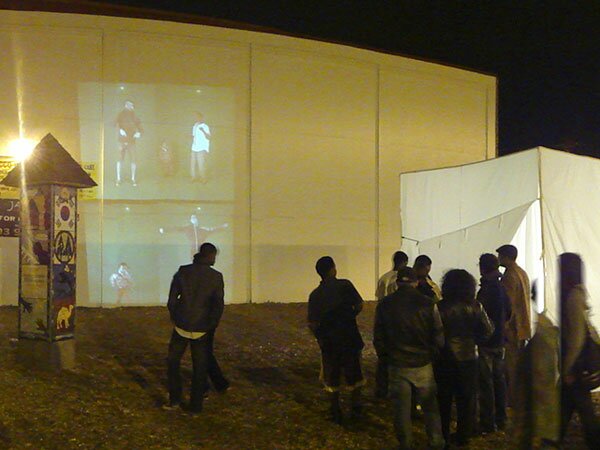
"Movement Museum is located in and around a pop-up field station that can be assembled anywhere in about 30 minutes. It is an experiment with the concept of a mobile museum, one where research is performed, recorded and projected as part of a large-scale, public composition."
We look forward to learning more about their progress, and iterating our own platform for speed of set-up and sharing.

Image source: Movement Museum project blog

Monday, March 14, 2011

FREE Shrine: Booklit


Shrine to the Beginning, by Kathy Mancall:
When you start a new book—at least, a new book you want to read, –present high-schoolers excepted who are being forced to read Billy Budd for their required summer reading lists—you crack open hope. You anticipate the journey ahead with excitement. Hope is unfurled before you like a clean, unbroken highway that disappears deliciously into the horizon line. That first sentence presumes innocence. As a reader, you haven’t been sullied yet by a plot that disappoints, dialogue that rings untrue, or the ending that didn’t lived up to the beginning. There is always hope that this will be the best thing you’ve read this year, or the guilty pleasure you’ve been waiting forever to indulge in, that invites you to load on the don’t-give-a-fuck mental calories. Great first sentences are like a clear bell ringing. They engage, amaze, and are the promise that you’ll be sorry when the last sentence ends.

So I’ve compiled here a shrine to some of my favorite beginnings. Maybe you’ll agree, disagree, or want to add a shrine of your own. If so, visit sfmobilemuseum.org and set down your favorite start.
Note: In addition to participating in our show, Kathy is a writer, knitter extraordinaire, and the force behind Princess Animal.

FREE Shrine: Tim's baby is no gentleman

San Francisco Mobile Museum, Free ShrinesA FREE Shrine, by Tim Phillips:
What's the definition of a gentleman?
Somebody who knows how to play the accordion, but doesn't.

I have a shrine to something, maybe music.
It is where I like to make my votive offerings,
in hope of gaining favor with a supernatural something, maybe music.
Imparting refuge in its patterns, it is my portable sanctum.

I'm no gentleman.
Tim John Phillips, San Francisco Mobile Museum, Free ShrinesAbove: Tim with Shrine.

Note: Along with this contribution to our show last year, Tim is also the force behind CMT Creates Music.

FREE Shrine: Bird Box

Peter Forrest Kline let his bird do the shrining for his piece in our show last year. So no poetic wall text to offer. As with many shrines, the object is what you make it.

Wednesday, March 2, 2011

University College London developing a Mobile Museum

Another Mobile Museum? How dare they! In London, a mecca of museum culture, the University College museum research group is pairing up with an architectural team to develop their own platform. This came to us thanks to Elizabeth Merritt, from the Center of the Future of Museums.

Like us, they are testing out new models for engagement via a mobile platform:

“In the process of working towards our new model for museum… what we would like is a small portable space that can house two or three people and one museum object, that is not a tent, that is in some way magic, appealing, thought-provoking, enticing…” - Celine West

Their platform for testing exhibits is being developed by appropriately named “Mobile Studio”:

“Mobile Studio is a young London-based architectural practice. The practice is actively involved in cultural and socially aware projects within the public realm. It is a design-orientated practice, and places a strong emphasis on collaborative working and public engagement.” - Mobile Studio

By the way, if you're wondering about how this project come to be out of a major university, the UCL has long innovation roots. They were the first secular university in London that also admitted women on the same basis as men, starting in 1826.

We look forward to hearing more from our friends across the pond. What do you think it will look like? How do you think it will be perceived by the public? What do you hope the museum will learn from this?

Better yet, would you like to try this yourself?

Image sources: Big Ben Flickr/CC/Rudolph Schuba, London Eye Flickr/CC/Shining Darkness

Monday, February 14, 2011

What's the NEA got to do with us?

image from Creative Commons/flickr/deltaMike/Mike RenlundIf you're a culture lover, liker, or follower, you may have heard that members of Congress are yet again, seeking to dismantle the NEA and the NEH via massive budget cuts.

Again? PBS/NPR/NEA/NEH to be cut, slashed, eliminated? Why does this keep coming up you may ask?

Waaaaaay back in 1998 Dr. Cynthia Koch, formerly of the Penn National Commission on Society, Culture and Community, suggested that thinking behind it goes like this:
The philosophical differences between the two sides represent varying views about human nature and its relation to government. Endowments proponents generally hold modern liberal-moderate political views: minimal intrusion on the part of the state in private life combined with confidence in an activist government to guarantee individual rights and broad access to social goods such as economic, educational, and cultural opportunity. This view is opposed by many political opponents of the endowments, but by far the strongest opposition comes from Christian conservatives who advocate elimination of the NEA (and the NEH in the heat of the 1995 funding crisis) as part of their broader social agenda. For them individual rights and free expression, fundamental values in the liberal tradition, are radically at odds with a world view from an older ideology that sees human beings as basically flawed, their capacities for good nurtured only in the strict observance of Christian dogma. A government that fails to enforce these precepts is at odds with their deepest beliefs and must be changed. - Cynthia Koch, Associate Director, Penn National Commission 1998
Here are the San Francisco Mobile Museum, we have a fundamental belief that access to uncensored education and information are a basic right of being American, and that we are all fundamentally good.

If that jives with your world view, we'd like to encourage you to participate in our free society by letting Congress know what you think.

;)

Image: CC/flickr/
deltaMike /Mike Renlund

Sunday, January 2, 2011

2010: analysis of 1

Last year was a bit immobile for us. All good reasons, nothing to do with the Museum: we were moving, there is the "day job", and I worked on a fun collaboration with Machine Project.

The exhibit we put together, called "Free Shrines" was a mix of a solicited challenge, some classic interpretive elements, and a little "visitor participation" thrown in for good measure. All in a roughly 8' D set up. Here's some thoughts on how it worked:

The Solicited Challenge
The challenge itself was fine and open-ended enough. Folks took to it in their unique and wonderful ways. A delightful mix of interpretations which I will show in following posts. What was different was that I didn't give a box or fixed format to people. While that worked fine for the "makers", it wasn't as effective for our "visitors". Seems that having a consistent framework when engaging an unusual thing like a pop-up museum makes it easier for them to grasp the overall experience:

april banks, san francisco mobile museum, maria mortati, sf mobile museum
Interpretive Elements
Since there wasn't a fixed format, I put in some backgrounds and images of shrines, etc. to flesh out the concept of the exhibit. It's hard to quantify their impact. I think on the panel for April Bank's piece it was very useful. Her's was a collage of photos of roadside shrines she'd taken on a ride across the US this summer:

san francisco mobile museum, maria mortati, sf mobile museum
Visitor Participation

This was by far the most successful element of the exhibit (and of past ones where we've had on-the-spot participation). I had modeled a Shinto "Ema" Shrine, where the public was invited as they are in Japan to write a wish and tie it up onto the shrine. Nearly everyone that approached the exhibit participated in it. What was funny was that most were fairly sincere. In the Looking for Loci map element, we got about 30% more wisecracks than in this instance...

san francisco mobile museum, maria mortati, sf mobile museum
san francisco mobile museum, maria mortati, sf mobile museumWith some adjustments Free Shrines may be out on the road again before launching a new exhibit. Look for us as the weather clears up.

Happy New Year!

Top Image: CC/Flickr/Ed Youdon. All others, San Francisco Mobile Museum.

Friday, December 10, 2010

NOW: Youthful Curating and Social Art Practice at SoEX


Always on the lookout for other explorations in exhibits and curating, tonight I'm headed over to see the latest and greatest from SF's Southern Exposure's Youth Advisory Board. SoEx "teaches YAB members to use art as a community-building tool and provides them with a space to create their own events and have their collective voices heard."

It's exciting that the practice of curating, putting on an exhibit, and thinking about the larger context that art and the public intersect in is being practiced by the youth in our area. H
ere's what they've been up to this fall... sounds similar to what many of us are striving to do:
"From September- December, YAB studied the practice of curating, and approached this skill as a collaborative creative process similar to art making. GONE explores and tests the limits of what an exhibition can be, investigating alternative curatorial methodologies in order to support and nurture the development of critical cultural producers."
Tonight's exhibit "Gone" is being shown alongside the "Boom" show, an annual juried show.


All images Southern Exposure.

Thursday, November 11, 2010

From Mobile Museums... to Pop-Up Operas?


If you thought it was a bit of work to mobilize a museum, imagine popping-up an... opera:


The John S. and James L. Knight Foundation is doing just that, with their series,
Random Acts of Culture.

The Knight Foundation's tagline is "
Informed and engaged communities", the project is a product of The Knight Arts Challenge. These are (seemingly) spontaneous arts events that erupt in communities that the Knights brothers published newspapers in.

Similar to the responses we've seen with the Mobile Museum, the feedback is generally one of gratitude. A commenter on their site put it this way:

Flash-mobs are another form of random acts of culture. Let us not forget, the Hammer Time Los Angeles event:


Top image: John S. and James L. Knight Foundation

Thursday, September 30, 2010

Summer Evening at the Exploatorium

san francisco mobile museum, maria mortati, free shrines, exploratorium
We've got a bit of a posting backlog here at the SFMM while I move.

Our soft opening of FREE Shrines at the Exploratorium last month was a lot of fun. It was our first evening event and a road test of one of our more participatory elements in the exhibit, the Ema Shrine. I'll talk about that later!

This time we used a more open-ended format for our "makers"- I gave folks a size and weight limit, but didn't provide a box for them to fill. The difference in form factors had pros and cons as I look back on this experiment. The pros were that the layout looked more like an exhibit the cons were that for folks encountering and usual idea in an unusual setting, I got the impression that it put a little more on them to grasp the overall idea.

san francisco mobile museum, maria mortati, free shrines, exploratorium

Monday, August 2, 2010

Exhibit Opening: This Thursday night!

The FREE Shrines exhibit makes it's first appearance at the Exploratorium After Dark event this week. While the shrines are free the event isn't: $15 + cash bar (Thurs. Aug. 5, 6-10pm).

But who can put a price on a evening where
chaos, culture, and the SF's own phenomena-driven-hands-on science-and-art-museum meet?

Image: the brilliant Mark Glusker, helping install lighting.

Monday, July 26, 2010

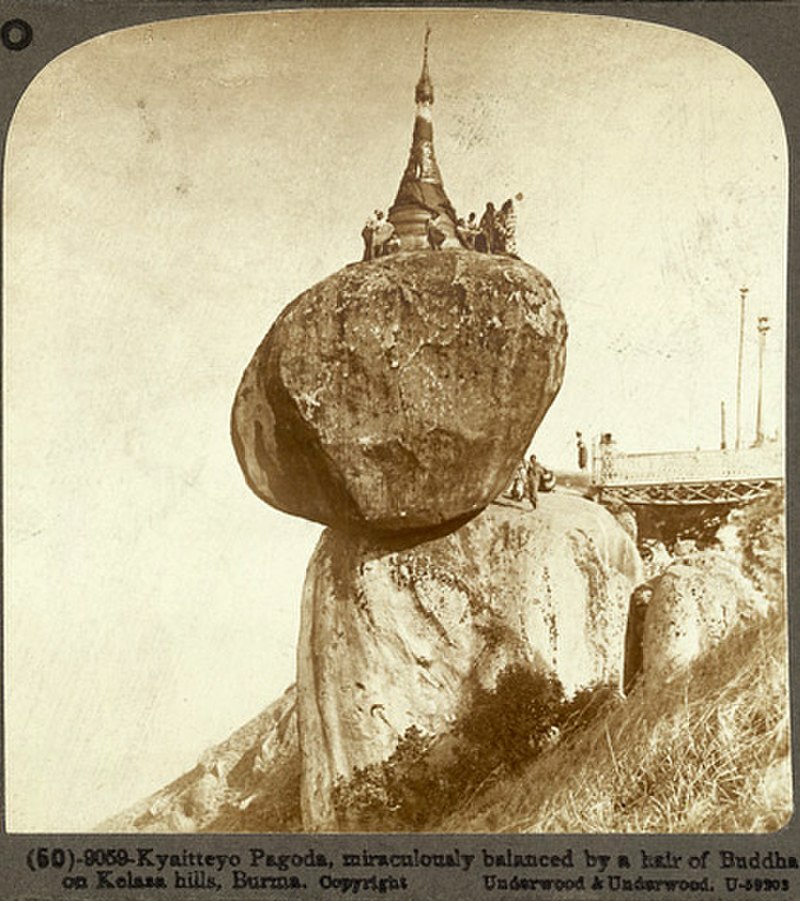
Shrinetasm: Myanmar's Kyaiktiyo Pagoda


As I'm doing research for our new exhibit FREE SHRINES, I find everything from the fantastic to the unassuming. At the same time, these objects, sites, reliquaries and shrines are nonetheless meaningful to their devotees.

This site is often called of course, The Golden Rock. It sits atop a small shrine, and it is said that you can pass a thread beneath the rock. Buddhist belief has it that it sits upon a single strand of Buddha's hair, and that seeing it will convert anyone to Buddhism.

Been there? I'm curious about how those who live with it so close by feel about it being the 3rd largest site of pilgrimage. Never heard of it? You can read at length about it
here.

Top image courtesy of Wikipedia, bottom, Creative Commons license via Flickr/R_Stanek

Saturday, July 17, 2010

FREE SHRINES exhibit challenge

FREE SHRINES is a new exhibit where we are exploring the history, meaning and spontaneous use of shrines with you. We'll look at public, religious and cultural examples, and invite you to add your wishes, locations, and remembrances.

Our exhibit challenge invites you to create a shrine of your own, to show at the exhibit. Something that can fit in the palm of your hand. Contact us at info [at] sfmobilemuseum [dot] org with questions.

HERE'S THE FREE SKINNY.

Saturday, July 10, 2010

SFMM Opening at Exploratorium After Dark


Our new exhibit "Shrines" will be making it's first appearance this season as part of the next Exploratorium "After Dark" event. Their theme is "Nomadic Communities" and we'll be in good company with the likes of the Dr. Karen Kalumuck, the Succulent Circus from Wonderarium, Dust City Diner, Paul Nosa, Harley K. Dubois, and hopefully Forage SF.

- Thursday, August 5, 2010
- 6-10pm

We'll be introducing you to the subject of shrines with a little history, roadside shrines, space for your to show your shrines in the Bay Area, and contribute to our take on a traditional Ema Shrine:

ema shrine
Top image Flickr/Creative Commons/Matt Baume who says "Once a month, the Exploratorium turns into the best bar in the city." Bottom image Wikimedia Commons.

Saturday, July 3, 2010

Roadside Shrine: Dead Man's Curve?

These photos are part of a theme we're exploring– Shrines. April Banks is an artist and designer who is currently on a cross-country bicycle trip called "We Ride 3000". She's photo-documenting a type of shrine we whiz by on the roadside.

april banks, sfmobilemuseum, san francisco mobile museum, roadside shrine"Chad and Brandi Moreno" (year not legible).

mark allen parker, april banks, sfmobilemuseum, san francisco mobile museum, roadside shrine"Mark Allen Parker, 2002". For another take on these, click here.


View Larger Map

Thursday, July 1, 2010

Roadside Shrine: Rte 33 Near Vernailis, CA

april banks, WeRide3000, sfmobilemuseum, san francisco mobile museum, roadside shrineApril said that this shrine looked like a real burial site. It looks well-tended too:

april banks, WeRide3000, sfmobilemuseum, san francisco mobile museum, roadside shrine


View Larger Map